Digital Business Cards for Consulting Firms
Consulting runs on first impressions and follow-through. A partner pitching a new engagement, an associate working a conference floor, a team onboarding a new hire mid-project, all of it depends on contact details that stay accurate and a card that actually gets used instead of left in a jacket pocket. Most guides to this topic push straight into CRM integrations and skip the more basic question: what does a consulting firm actually need day to day?
Here is what to look for, what to know about keeping a growing firm on-brand, and where the cost actually adds up if you are not paying attention.
Why This Gets Harder as a Firm Grows
A two-person practice can keep branding consistent by hand, one founder checks every card before it goes out. That does not scale. By the time a firm has 15 or 20 consultants across a couple of offices, someone is inevitably carrying an outdated title, an old logo, or a slightly-off color that nobody caught before a client meeting.
The same goes for leads. A handful of consultants attending a handful of events is easy to track informally. A firm running a dozen consultants through conferences, pitches, and panels needs some way to see what is actually happening across all of it, not just whichever consultant happens to mention a good lead in a hallway conversation.
For most consulting firms, the right card locks branding centrally so every consultant looks consistent, captures leads at pitches and conferences rather than just sharing your own details, and does not charge a per-seat fee that scales against you as the firm grows.
Key Features for Consulting Firms
This is just a handful of what eylet can do.
See All FeaturesWhat Consulting Firms Actually Need
Most comparison posts on this topic lead with CRM integrations and stop there. That matters for some firms, but it is not the only thing that determines whether a card gets used consistently across a growing practice.
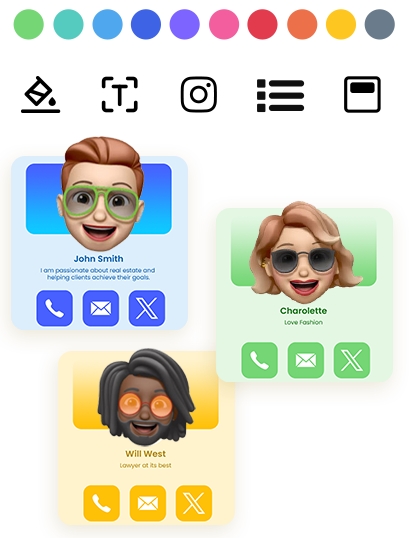
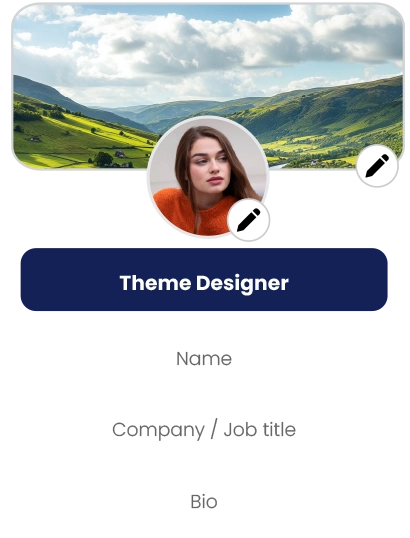
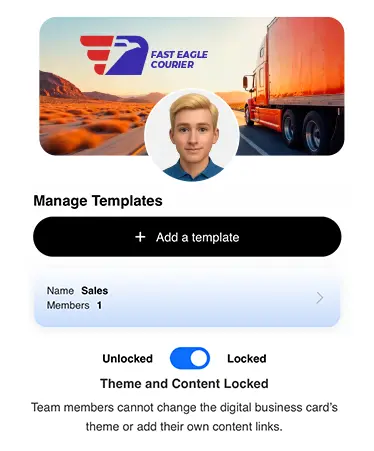
• Consistent branding without manual work. A new consultant's card should match the firm's look automatically, not need a designer's involvement every time someone joins.
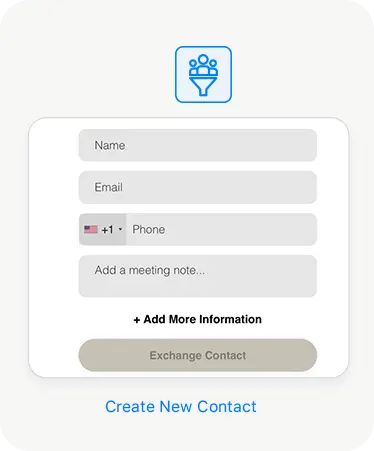
• Lead capture at pitches and events, not just sharing. A card that only shares your own details misses the actual moment of a conference or a panel where most new relationships start.
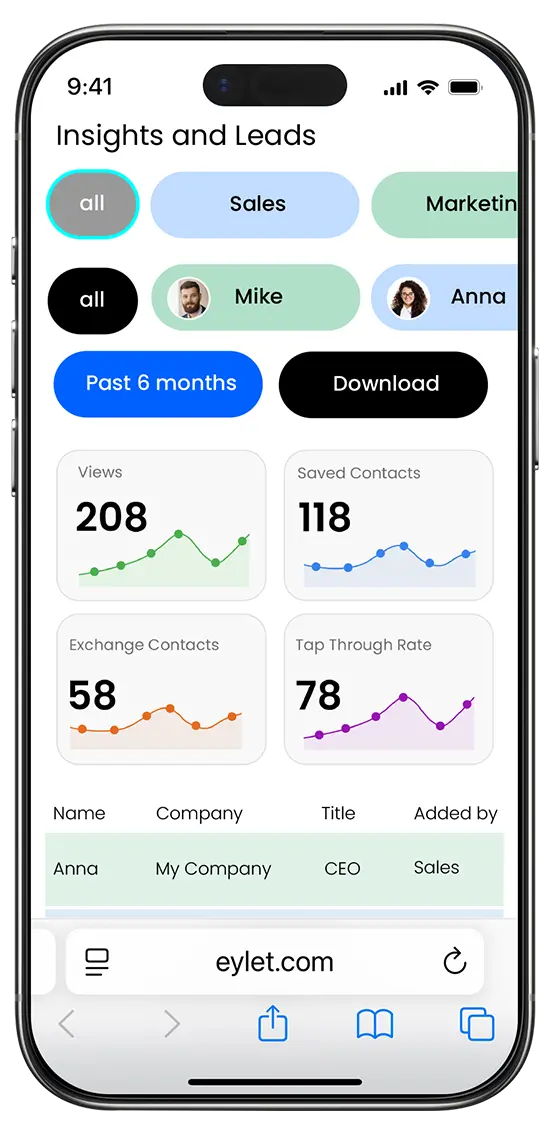
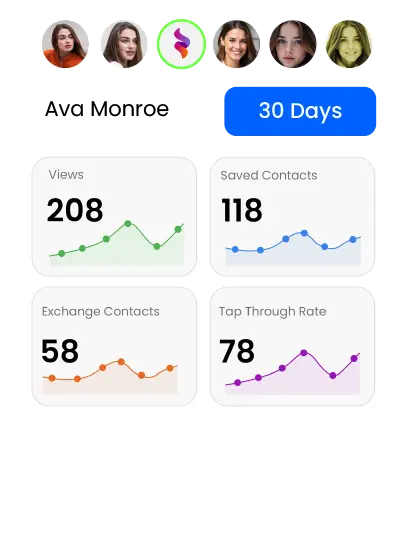
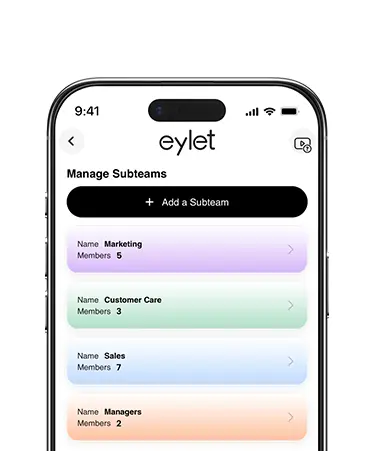
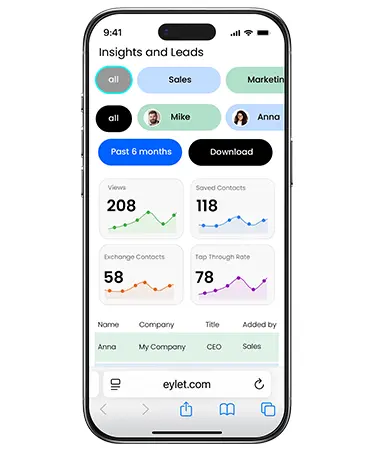
• Visibility across the whole firm. A partner should be able to see engagement patterns across the practice, not just their own card's activity.
• Cost that scales with the firm, not against it. A per-seat fee that looks small at 8 consultants gets painful fast once the firm doubles.
One Card, Multiple Practice Areas
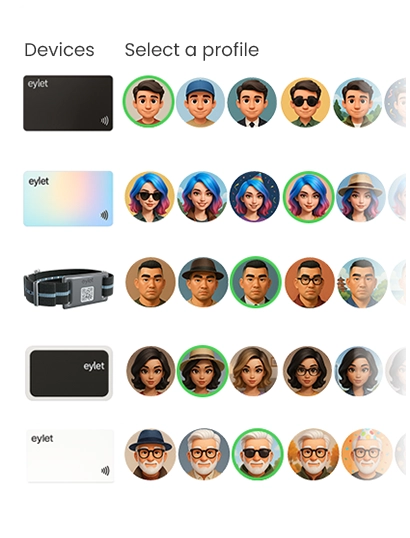
Consultants who work across more than one practice area, strategy and operations, for example, often end up needing to present themselves slightly differently depending on the room. A card that only supports one static profile forces a compromise: either a generic bio that undersells both areas, or two separate cards to carry.
eylet supports up to 6 profiles per card, so a consultant can keep a strategy-focused profile and an operations-focused profile on the same physical card and switch between them in seconds, depending on who they are talking to.
eylet vs. the Subscription Model
Several platforms built for consulting teams charge per user, per month, often with team management and branding controls locked behind a paid tier on top of that. That is manageable for a small practice testing the idea, and much less manageable once headcount grows.
| What You Get | eylet |
| Monthly cost per consultant | $0, forever |
| Team members included | Unlimited |
| Locked branding across the firm | Included |
| Event lead capture mode | Yes, Lead Generation Mode |
| Lead export | Excel/CSV, unlimited |
Capturing Leads at Pitches and Conferences
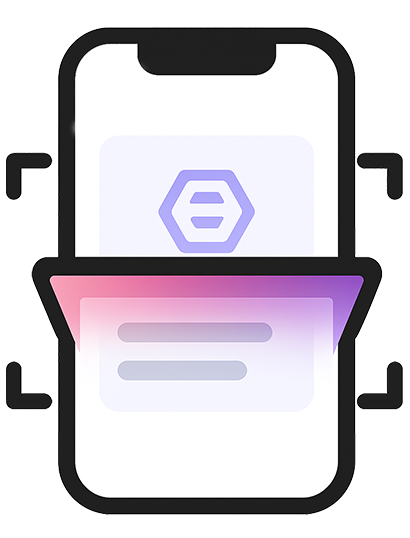
A strong pitch or a good conference panel puts a consultant in front of a lot of the right people at once. eylet's Lead Generation Mode flips the usual card exchange around: instead of just sharing your own details, it collects the other person's information first, so a conference with fifty attendees turns into fifty captured leads, not fifty business cards you hope people kept.
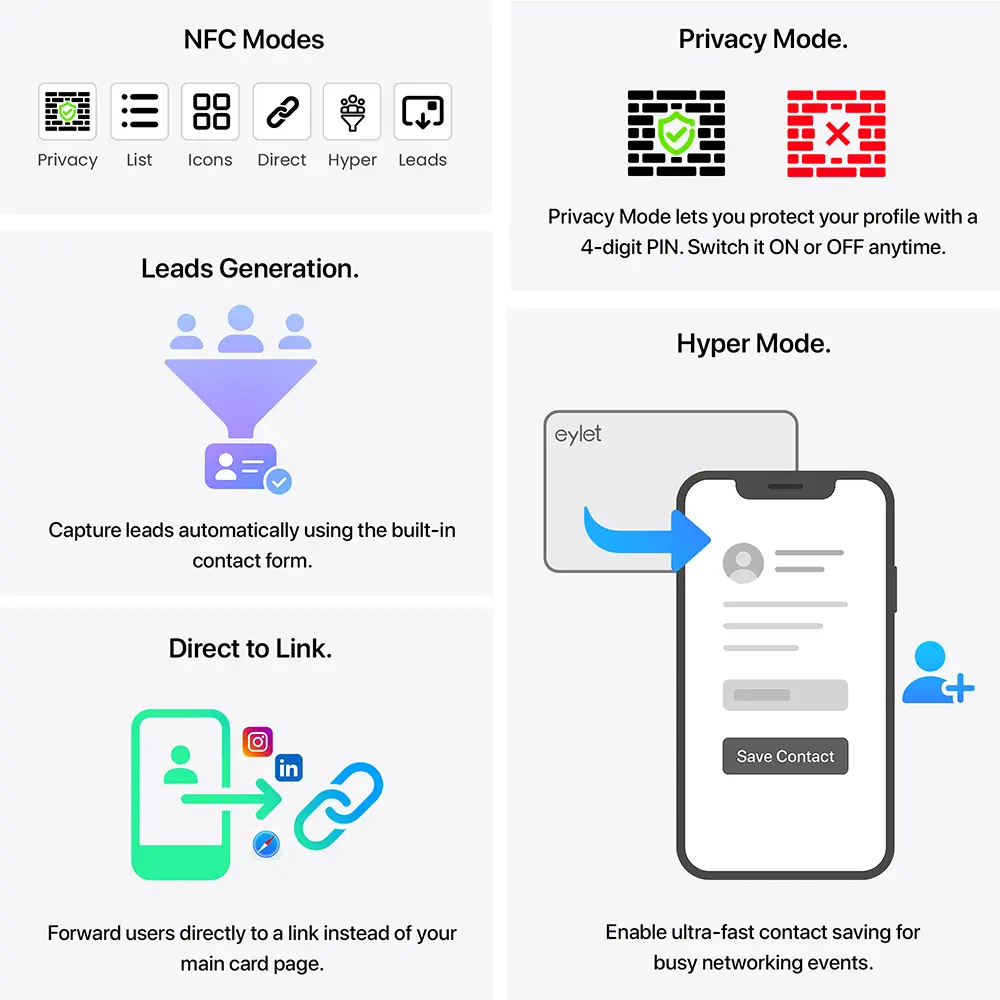
Export the full list to Excel or CSV afterward and load it into whichever CRM the firm runs. eylet does not run a native sync with Salesforce, HubSpot, or similar tools today, so this is a manual import step rather than a live connection, but it beats re-typing names from a stack of cards the morning after an event.
Analytics help after the event too. eylet tracks profile views and link clicks across every consultant's card, so if a prospect who attended a pitch revisits a consultant's profile a few days later, that is a stronger signal for the firm to prioritize than working straight down a sign-in sheet in order.
Setting Up Your Firm's Cards
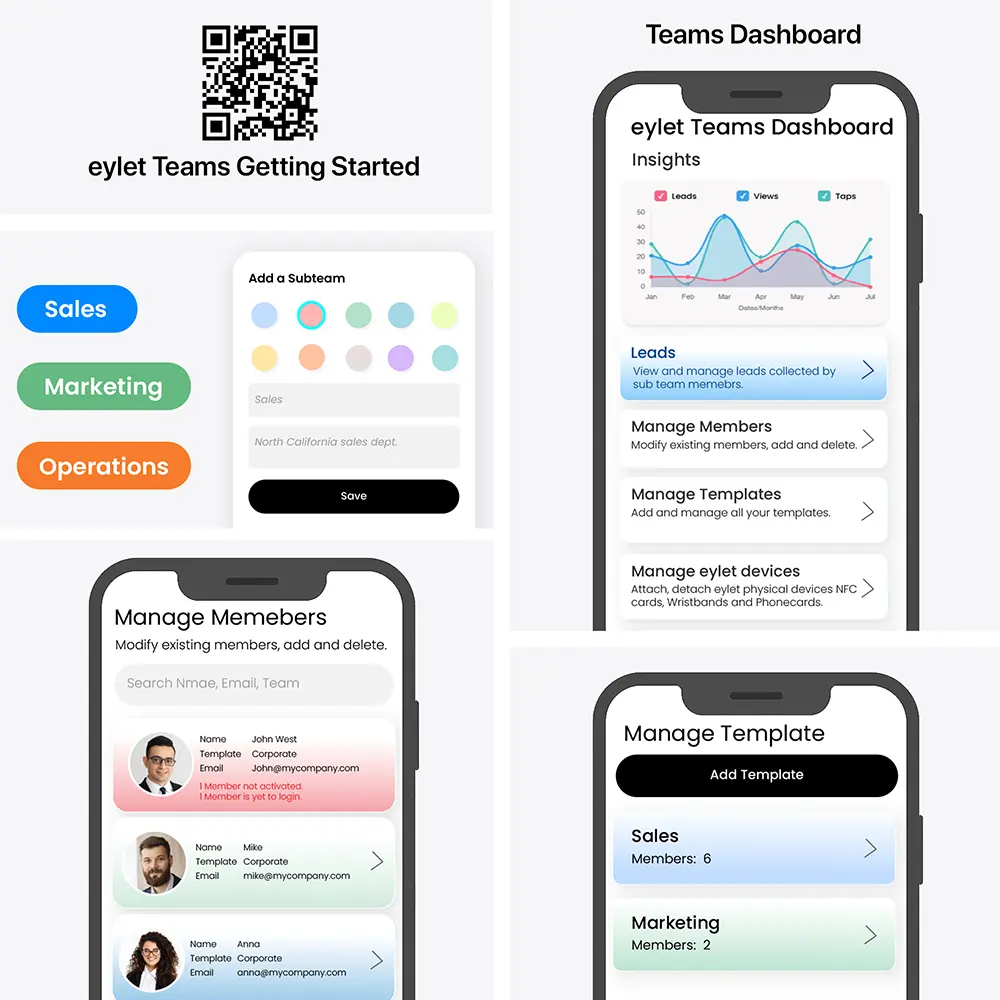
Lock the firm's logo, colors, and template in Teams before onboarding your first consultant, so every new card matches from day one.
Turn on Lead Generation Mode before any pitch, conference, or panel, so every conversation ends in a captured lead.
Check the team analytics dashboard after major events, while follow-up timing still matters.
Export captured leads to Excel or CSV and load them into the firm's CRM while the context is still fresh.