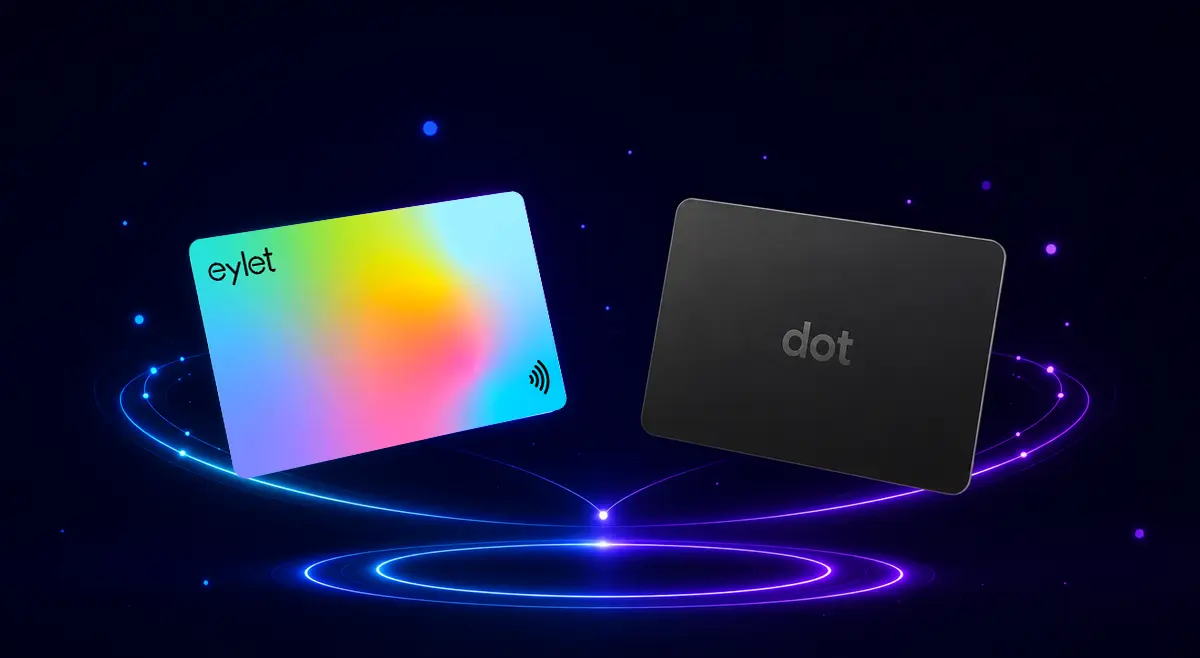
eylet vs Dot Card: Full Comparison
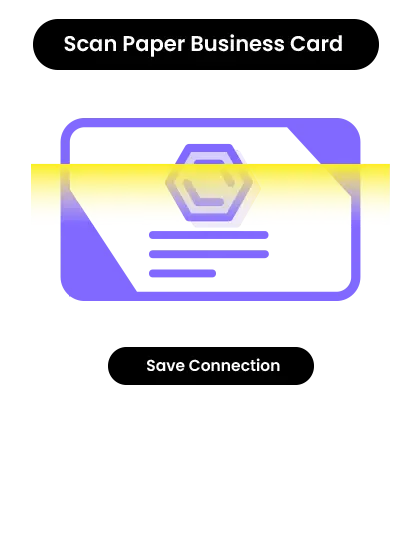
If you are comparing eylet and Dot Card in 2026, the most important thing to understand is where each one actually charges you. Dot Card sells premium hardware and gives you a basic profile for free. But the features that make a digital business card genuinely useful, the AI paper card scanner, contact export, advanced contact management, and removing Dot's own branding, all sit behind a recurring subscription called dot.Profile+.
eylet takes the opposite approach. You buy a card once, and every feature is included from day one, no upgrade tier, no recurring fee. That difference in pricing structure is the whole story here, and it is worth understanding exactly what you are and are not paying for on each side before you buy.
What Each Platform Is Built For in 2026
eylet
Digital business cards for individuals, freelancers, small businesses, and teams. NFC + QR sharing, lead capture, analytics, AI paper card scanning, team management. One-time hardware cost, every feature included, no subscription for anything.
Dot Card
Premium NFC hardware company, metal and stainless steel card options, basic profile free with purchase. Advanced features (AI scanner, contact export, branding removal) require a dot.Profile+ subscription on top of the hardware cost.
If you want a business card that does everything out of the box with no ongoing bill, eylet is built for that. If premium physical hardware, metal finishes, and brand aesthetics matter more to you than avoiding a subscription, Dot Card's build quality is genuinely strong, you will just want to budget for Profile+ if you want the platform to do more than share a static profile.
Pricing: The Clearest Difference
eylet's pricing is simple. You buy a card once. Everything else is free.
eylet, one-time card cost, no subscription
• 2-pack White: $19.99 ($10.00 per card)
• 2-pack Black + Prism: $25.49 ($12.75 per card)
• 5-pack Black: $44.49 ($8.90 per card)
• 5-pack Prism: $45.99 ($9.20 per card)
• Platform: $0 per month, forever
Dot Card's pricing has two separate layers: the hardware, and the subscription you need for the platform to do much beyond hold a static profile.
Dot Card, hardware plus optional subscription
• dot.card (standard): $30 per card
• dot.metal: $50 per card
• dot.bundle: from $70
• dot.Profile+: $15/month, or $12/month billed annually ($144/year), 7-day free trial
• Profile+ unlocks: AI paper card scanner, contact export, advanced contact management, custom company logo, and removing dot's own branding from your profile
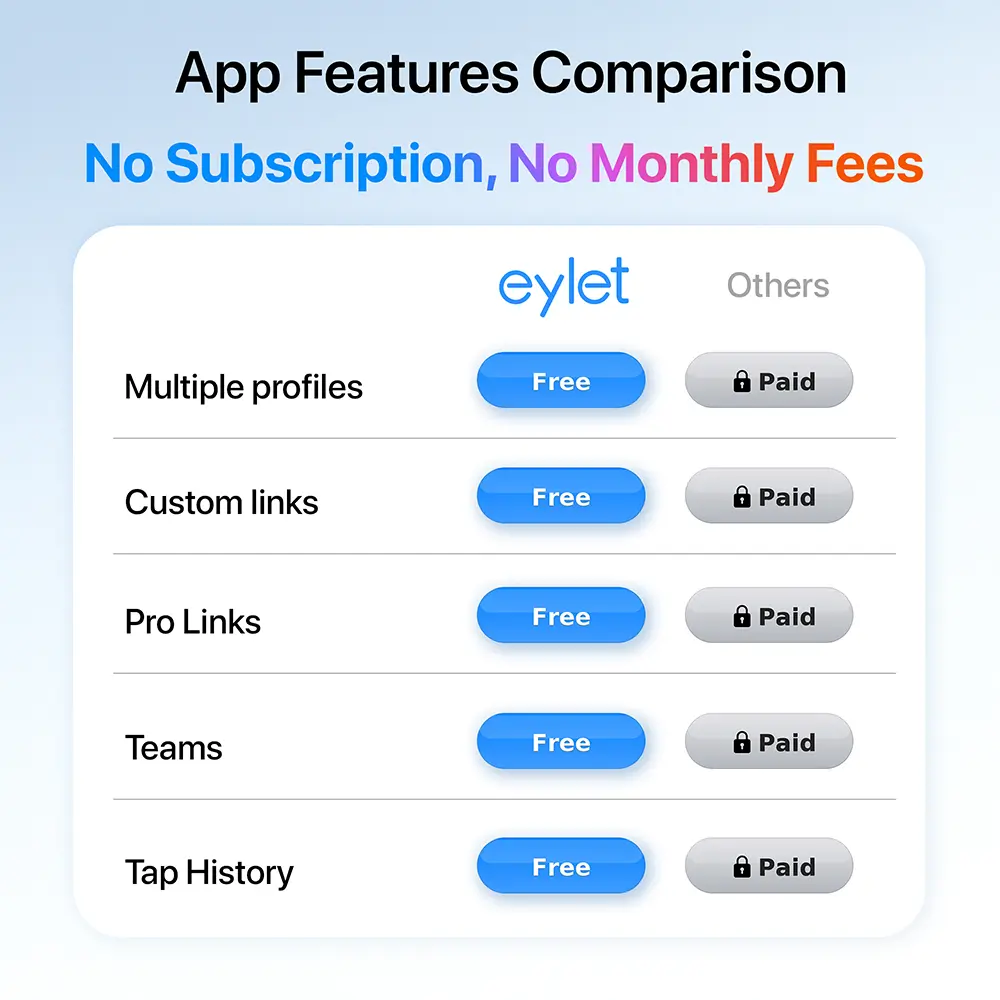 The free tier gets you a working profile and basic NFC/QR sharing, but the features that make a card useful for actual networking, exporting the people you meet, scanning a paper card someone hands you, or removing Dot's branding from your own profile, all require Profile+. Over three years, that subscription alone runs $432–$540 on top of the hardware. The same three years on eylet costs whatever you paid for the card, once.
Head-to-Head Feature Comparison
Where Dot Card Wins
This is not a one-sided comparison. Dot Card does some things genuinely well:
Premium hardware options
Dot's metal and stainless steel cards are well-built, with a genuine premium feel. If the physical object matters to you as much as the profile behind it, Dot's hardware quality is a real strength, reflected in strong review counts on their own product pages.
Design-first aesthetic
Dot's profile themes and device finishes are built around visual polish. For creators and personal-brand use cases where the card itself is part of the impression, that focus shows.
No subscription required for basic sharing
If all you need is a static profile and tap-to-share with no analytics, export, or scanning, Dot's free tier genuinely covers that. Not every user needs the features Profile+ unlocks.
Where eylet Wins
No subscription, ever
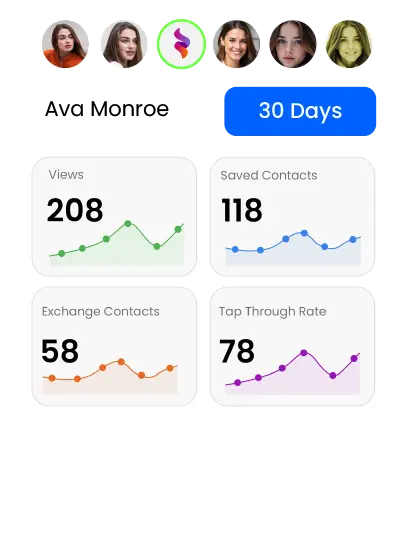
The AI card scanner, contact export, analytics, and team management that Dot Card gates behind a $12–$15/month Profile+ plan are included in eylet's one-time card cost. You do not upgrade to unlock things.
No branding removal paywall
Your eylet profile carries your identity from the first tap. Removing platform branding on Dot Card requires Profile+.
Broader form factor lineup
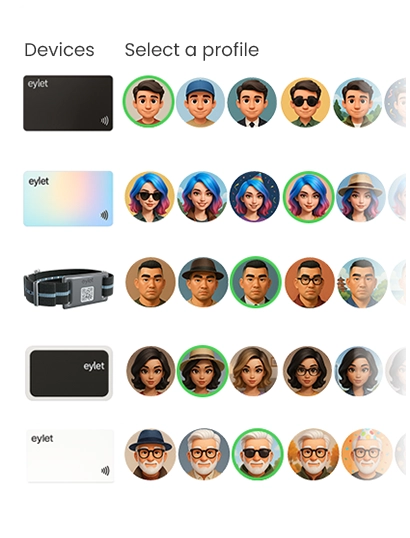
Beyond the standard card, eylet offers a wristband and a phone-attached card for people who want their profile always on hand without pulling out a card. Dot Card's current lineup does not include either.
Privacy Wall
eylet's 4-digit PIN locks your entire profile from view until you choose to unlock it. Dot Card does not offer a comparable protection.
Team management included
eylet Teams supports unlimited members, locked branding, and centralized analytics with no per-seat fee. Dot Card's team functionality sits on a separate plan.
The Honest Verdict
For most professionals who want a digital business card that actually does the job, sharing your profile, capturing leads, exporting contacts, scanning a paper card someone hands you, without a recurring bill: eylet is the better choice. Everything is included from the first tap.
If premium metal hardware and a design-first aesthetic matter more to you than avoiding a subscription, and you are comfortable paying $12–$15 a month for the features that make the card useful beyond a static profile, Dot Card is a well-built option.
The clearest question to ask: do you want a beautiful object, or a business card that does everything without a monthly bill? For a broader look at how eylet compares across the market, see the complete alternatives guide. For more on eylet's no-subscription model, see the full feature breakdown.
Frequently Asked Questions
Is eylet better than Dot Card?
For most people using a digital business card for everyday networking, yes. eylet includes AI scanning, contact export, analytics, and team management at no ongoing cost. Dot Card is a strong choice if premium metal hardware matters more to you than avoiding a subscription.
Does Dot Card have a monthly subscription?
Basic profile sharing is free with your card purchase. But the AI paper card scanner, contact export, advanced contact management, and removing Dot's branding all require dot.Profile+, which costs $15 per month, or $12 per month billed annually.
How much does Dot Card cost compared to eylet?
Dot Card's standard card starts at $30, with metal cards from $50. eylet's cards start at $10 per card in a 2-pack. Both are one-time hardware purchases, but Dot's fuller feature set requires Profile+ at $12–$15/month, while eylet's platform has no ongoing cost.
Can I export contacts I collect on Dot Card for free?
No. Contact export is listed as a dot.Profile+ feature, which requires the paid subscription. eylet includes unlimited Excel/CSV export at no cost.
Does eylet offer a metal card like Dot Card?
eylet's current lineup focuses on its Prism, Black, and White card finishes rather than metal hardware. If a metal or stainless steel card is a priority, Dot Card's hardware options are worth considering alongside eylet's broader form factor range, including its wristband and phone-attached card.
Do metal NFC cards scan as reliably as standard cards?
Metal can interfere with NFC signal strength, a known tradeoff with any metal NFC card, not just Dot's. Dot addresses this in its newer Metal 2.0 card with a stronger scanning chip. eylet's cards use non-metal materials, which avoids this tradeoff entirely rather than engineering around it.
Can I use Dot Card for free?
After buying the hardware, yes, for basic profile sharing. But the features most people expect from a digital business card platform, scanning, export, and analytics, require the Profile+ subscription. eylet's platform is free forever after the card purchase, with no separate tier.
Try eylet, No Subscription, Full Features
NFC tap, QR code, lead capture, analytics, AI card scanning, and team management. One card purchase, everything included, no monthly bill.